
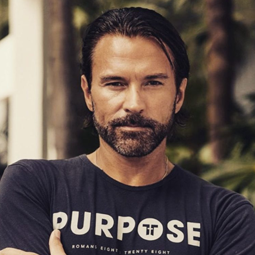
Mark Young is the CEO of Ryze Agency, where he helps brands scale through world-class marketing, sharp product positioning, and operational clarity. Mark has built multiple successful businesses and has become a trusted advisor for founders looking to break through plateaus and expand into new markets. He has recently published a series of 5 books titled the Ecommerce Brand Guide to the Galaxy with Benjamin Hardy.
Highlight Bullets
- Differences between selling on Amazon and Shopify, focusing on intent-based versus cold traffic marketing.
- Common misconceptions brands have about marketing metrics, particularly the focus on ROAS.
- Importance of understanding customer acquisition cost (CAC), lifetime value (LTV), and average order value (AOV) for sustainable growth.
- Strategies for increasing average order value through upsells and bundles.
- The significance of customer experience and retention marketing on Shopify compared to Amazon.
- The role of storytelling and brand identity in engaging customers on Shopify.
- Examples of successful and unsuccessful brand strategies in e-commerce.
- Actionable takeaways for brands looking to scale on Shopify.
- The impact of brand loyalty and customer relationships on long-term success.
- Recommendations for influential books and tools in the e-commerce space.
In this episode of the Ecomm Breakthrough Podcast, host Josh Hadley speaks with Mark Young, CEO of Ryze Agency, about scaling DTC brands on Shopify. Mark explains the fundamental differences between Amazon’s intent-based selling and Shopify’s cold traffic environment, emphasizing the need for brand storytelling. He challenges the common obsession with ROAS, introducing the “holy trinity” of metrics: Customer Acquisition Cost, Lifetime Value, and Average Order Value. Mark also highlights the importance of retention marketing and authentic customer relationships, sharing real success and failure stories to illustrate how strategy, not tactics, drives sustainable e-commerce growth.
Here are the 3 action items that Josh identified from this episode:
- Shift from “conversion” to “connection”
Stop treating Shopify like Amazon. Build demand through storytelling, content, and brand experience—optimize for trust and engagement before expecting conversions. - Scale with the right metrics (not ROAS)
Track and optimize your CAC:LTV:AOV triangle. Aim for a 1:3 CAC:LTV ratio, and be willing to accept lower short-term ROAS to acquire high-value customers. - Increase AOV + retention to unlock profit
Bundle products, upsell, and improve post-purchase experience. Focus on repeat buyers (email/SMS, loyalty, CX) to maximize LTV and make your paid acquisition sustainable.
Timestamps:
00:00:38 Introduction to the E-comm Breakthrough Podcast
The announcer introduces the podcast, aimed at helping seven-figure e-commerce business owners unlock their full potential and growth.
00:00:52 Host’s Introduction and Guest Welcome
Host Josh Hadley introduces himself and the episode’s guest, Mark Young, CEO of Ryze Agency and author.
00:02:12 The Challenge of Scaling from Amazon to Shopify
Mark discusses why brands successful on Amazon often struggle on Shopify, highlighting the fundamental differences between the platforms.
00:04:15 Amazon vs. Shopify: Intent vs. Cold Traffic
A breakdown of how Amazon is an intent-based platform, while Shopify requires cold traffic marketing and brand storytelling.
00:05:57 Common Misconceptions Brands Have with Agencies
Mark explains the two types of clients he encounters: startups who think they know everything and brands with agency trauma.
00:08:20 The Problem with Over-relying on ROAS
Mark details why Return on Ad Spend (ROAS) is a “fool’s metric” and how agencies can manipulate it.
00:11:02 The Holy Trinity of E-commerce Metrics
Mark explains the three core KPIs brands should focus on: Lifetime Value (LTV), Customer Acquisition Cost (CAC), and Average Order Value (AOV).
00:18:24 The Importance of Average Order Value (AOV)
Discussion on why an AOV of at least $50-$100 is crucial for profitability due to shipping costs and consumer psychology.
00:21:09 Focusing on Customer Experience and Retention
Mark argues that brands focus too much on acquisition and not enough on creating an impressive backend customer experience.
00:24:49 The Mindset Shift from Amazon to Shopify
Brands moving from Amazon must learn to focus on customer experience and brand storytelling, which Amazon handles for them.
00:28:11 Building a Relational Brand
The importance of creating a personal, relational brand on Shopify, as opposed to Amazon’s transactional nature. People buy from people.
00:33:19 Be the Guide, Not the Hero
Using the “StoryBrand” framework, Mark explains that brands should act as the guide (Gandalf) for their customer (Frodo).
00:35:09 Case Study: A Successful Skincare Brand
A brand succeeded by understanding its brand voice, embracing omnichannel marketing, and defining clear goals for its agency partnership.
00:38:00 Case Study: A Failed Brand
A brand failed due to a reactive CEO, a singular focus on top-line revenue, and training customers to expect constant discounts.
00:41:38 Three Actionable Takeaways
Josh Hadley summarizes the key lessons: understand your brand story, focus on LTV over ROAS, and prioritize customer retention.
00:44:03 Mark’s Most Influential Books
Mark shares his favorite and most influential books, including works by Donald Miller, Will Guidara, and Stephen Covey.
00:45:12 Leveraging AI in Business
Mark discusses how his agency uses AI, specifically “Claude bots,” to imagine a new kind of business, not just automate tasks.
00:48:08 Who to Follow in the E-comm Space
Mark recommends following Alex Hormozi and Donald Miller and emphasizes the value of nano and micro-influencers over macro-influencers.
00:49:16 How to Connect with Mark Young
Mark shares where listeners can find him, his books, and his agency, and discusses his passion for helping entrepreneurs.
Resources mentioned in this episode:
- Josh Hadley on LinkedIn
- eComm Breakthrough Consulting
- eComm Breakthrough Podcast
- Email Josh Hadley: Josh@eCommBreakthrough.com
“Ryze Agency“: “00:02:01”
“Shopify“: “00:02:55”
“Meta Ads“: “00:06:56”
“Google Ads“: “00:11:12”
“TikTok Shop“: “00:02:12”
“Claude Bots“: “00:45:19″Books
“The E-commerce Brand Guide to the Galaxy”: “00:02:12”
“The Myth”: “00:01:04”
“What Got You Here Won’t Get You There”: “00:03:58”
“Unreasonable Hospitality”: “00:22:28”
“Scary Close”: “00:44:46”
“Story Brand”: “00:44:46”
“First Things First”: “00:44:46″Key Concepts and Metrics
“KPIs (Key Performance Indicators)”: “00:08:48”
“ROAS (Return on Ad Spend)”: “00:11:12”
“CAC (Customer Acquisition Cost)”: “00:12:44”
“LTV (Lifetime Value)”: “00:12:44”
“AOV (Average Order Value)”: “00:12:44”
If you’ve hit a plateau and want to know the next steps to take your business to the next level, then email me at josh@ecommbreakthrough.com and in your subject line say “strategy audit” for the chance to win a $10,000 comprehensive business strategy audit at no cost!
Transcript:
Mark Young 00:00:00 Because if I can get you to know what the you know that our crazy acronyms are about, if I can get you to understand which KPIs your key performance indicators actually move the needle for you, we can start having some common language. And once we have common language situations, we can actually strategize together. And there is no business owner feels like they’re always wrestling with the agency. And you do get agencies out there like, oh, but we got 3 million impressions for your brand. It’s like great. Like, how many of those impressions am I able to deposit in my bank account this afternoon?
MC 00:00:38 Welcome to the E-comm Breakthrough Podcast. Are you ready to unlock the full potential and growth in your business? You’ve already crossed seven figures in sales, but the challenge is knowing how to take your business to the next level.
Josh Hadley 00:00:52 If you want to know how to scale your brand on Shopify, and how would you like to learn how your brand can be dangerous when working with agencies so that you know the exact questions to ask them to actually drive performance.
Josh Hadley 00:01:04 Our guest has all the right answers for you today. Welcome to the Econ Breakthrough Podcast. I’m your host, Josh Hadley. I scaled my own brand from 0 to 8 figures in sales, and now my mission is to take it to over nine figures on my journey to nine figures. I bring you the unfiltered conversations with the smartest minds in eCommerce. Past guests include Ezra Firestone, Kevin King, and Michael E Gerber, author of The Myth. Today, I am super excited to introduce you all to Mark young. We are joined by somebody who brings a rare combination of creative strategy, operational expertise, and leadership excellence. Mark is the CEO of Ryze Agency, where he helps brands scale through world class marketing, sharp product positioning and operational clarity. Mark has built multiple successful businesses and has become a trusted advisor for founders looking to break through the plateaus and expand into new markets. He has recently published a series of five books titled the E-commerce Brand Guide to the Galaxy with Benjamin Hardy. So with that introduction, welcome to the show, Mark.
Mark Young 00:02:01 I appreciate the invite. Josh. Like every time I hear somebody give these like intros of me, I’m always sitting here like, wow, I want to meet this guy. He sounds really cool.
Josh Hadley 00:02:08 You are the cool guy in the room right now.
Mark Young 00:02:11 I appreciate that.
Josh Hadley 00:02:12 Well, you come with a great background, and especially since you’ve just released this series of five books, obviously you know a thing or two about scaling brands, you know, DTC brands, and especially on Shopify, what’s working in TikTok shop on meta and all of that good stuff right now. So, Mark, I want to like just jump into the deep end right now. I know our audience like they’re all e-commerce business owners. They want the tactics, how they actually scale. But the biggest challenge knowing that, like most of the brands listening right now, they’ve had success on Amazon. They might have dabbled in Shopify, some have had success, others have not had success. So, Mark, I would love for you to maybe like demystify, like, why are certain brands successful on Shopify while others struggle? What do you see?
Mark Young 00:02:55 So many answers to that, Josh? Why do some brands work and some brands don’t? And wow.
Mark Young 00:03:01 That’s. Wow. Yeah. That’s a question that’s beyond the deep end. You just jumped into the ocean. so many answers to that. And I think so much of it. I’m just going to say a strategy. Like, I’ll give you one answer and say strategy. And I know that’s kind of a sell out answer, but that word applies everywhere. And part of it is brands don’t realize you and I were talking even before the podcast. They don’t realize that a tactic is not a marketing plan. And Amazon, it’s speaking to your audience. People who’ve been successful on Amazon and are struggling getting out of Amazon into another, you know, Shopify world, if you will, and Shopify just being kind of our Kleenex as opposed to tissue. Shopify now encompasses anything e-commerce related because it doesn’t need to be Shopify specific. But the biggest thing that I think brands are having is that they’ve become successful in one area, and that same skill set doesn’t translate into all these other areas, right? It’s the you know, I was a fabulous dinner, you know, joint for a very long time.
Mark Young 00:03:58 But why does nobody come in, like, take Taco Bell? Trying to serve breakfast like it is such a stupid mismatch of a brand. Because Taco Bell is not a breakfast place. I don’t associate them. So why have they struggled with breakfast for so long? Because I don’t go to Taco Bell for breakfast. That’s not a consumer behavior. And unfortunately, I think a lot of brands that have been successful on Amazon, what got you here won’t get you there, which is a great book, by the way. And part of the reason behind that, just unpacking Amazon specifically, is that Amazon is an intent based platform. People go to Amazon to find something. Your entire tactic, your entire metric when you’re selling on Amazon is they’re already looking for what you’re selling. You just need to outperform everyone else who’s selling the same thing. I mean, that’s literally the game on Amazon is I’m selling paper towels. You’re selling paper towels. Someone went to Amazon and typed in paper towels. I just need to learn how to shout louder than all the other paper towel vendors on Amazon.
Mark Young 00:04:53 That is not the case when you are doing e-commerce in the general world, because that is high intentioned traffic. It’s like the people who think they’re successful on Google because they’re able to sell products. When people search their brand name and trying to explain to them that if someone is searching your brand name, you do understand that’s not sales. At that point, you’re just a cashier. And on Amazon, you’re just the loudest cashier. When you’re trying to do e-commerce from a brand standpoint, you are talking to unintelligent people. That is cold traffic marketing, people who’ve never heard of your product, people who may have never even heard about anything like your product before, and you are trying to get them interested in what that is. That is such a different conversation. You know, that’s like talking, talking to your fiance about having children versus going on a first date and talking about children. Like, that’s a very different conversation because there’s a warmer audience involved when you’re talking about Amazon. So again diff totally different world.
Mark Young 00:05:54 It’s an apples to cinder blocks kind of comparison.
Josh Hadley 00:05:57 Yeah. So when people come to you like what are the bigger questions that people are coming to you or what are the myths that they come to you with that you almost have to like, educate them on to say, all right, you do want to get into the world of true e-commerce. You need to have like disruptive marketing to actually drive traffic to your storefront. You’re not just relying on high search intent. What are some of like, the questions, the misconceptions that people have in order to have success on Shopify?
Mark Young 00:06:23 Well, probably the biggest misconception that I deal with on a regular basis, and I say this every time a new client comes to me to talk, they’re in one of two positions, because bear in mind, they’re shopping for an agency. They’re in 1 or 2 positions. Either they’re brand new startup and just don’t know what they don’t know, or alternatively, they’re just coming out of a bad relationship. And in either of those situations, there’s there’s damage control and education that needs to take place on my part because either they are brand new to the space, and if they’re brand new coming into the space, I say they already think they know everything.
Mark Young 00:06:56 We had a client recently that we’ve just started working with that they’re I think they’re great people really enjoy them. We’re going to be doing a lot of great stuff with them in the in probably the next couple of weeks. They’re coming to our office next week to do a full strategy session, the whole deal. They literally told us that they didn’t want us to manage their meta ads, because they had somebody who was doing that. And the more I asked questions, the person that they thought was managing their meta ads had nothing to do with meta ads. Like, there was that big of a gap in their understanding of what was taking place, that they thought they signed a contract, for one thing, when in fact it was a company that was doing influencer engagement. Like, they literally had no idea what they signed. So when we’re dealing with a startup, usually it’s those conversations. It’s they think they know what they’re talking about and don’t want to don’t want to feel like they don’t know what they’re talking about because that’s that really disenfranchising a brand to feel that way.
Mark Young 00:07:49 or we get people who are coming from a bad agency experience. That’s why they’re out looking for a new agency, in which case we’re saddled with all of the expectations and all of the trauma that has already taken place. And I say, like, it’s the person who has rebounded into another relationship because they just got out of a bad one. And every time I use a buzzword that I don’t know I’m using because I don’t know that that’s a trigger, you know, they flinch. So we’re usually overcoming. And usually what I find, and my reason for even writing the e-commerce brand guide to the Galaxy Book series has been we find that there is a lack of common language that exists when communicating with clients overall. You know, I say we’re running meta ads. You say we already have that handled, but I unpack it and find out that no, you don’t. You have no idea. Or we get the damaged client who comes in and says everything we do has to have a 1.7 Roas. And I’m trying to explain to the client that that’s a, that’s a fool’s metric, because you actually have a ten x LTV to your current CCaC.
Mark Young 00:08:48 The problem is I used words like LTV and KAC, and they have no idea what those things mean because they’ve been programmed to stare at Roas their entire life. So we’re unpacking, we’re re-educated, and we’re re indoctrinating people into a new pattern. And my belief is that there is. I can market your company for you. That’s easy. But my goal is to get you to understand the marketing of your company. Because if I can get you to know what the you know, our crazy acronyms are about, if I can get you to understand which KPIs your key performance indicators actually move the needle for you, we can start having some common language. And once we have common language situations, we can actually strategize together. And there is no business owner feels like they’re always wrestling with the agency. And you do get agencies out there like, oh, but we got 3 million impressions for your brand. It’s like, great. Like, how many of those impressions am I able to deposit in my bank account this afternoon.
Mark Young 00:09:47 So there’s a lot of agencies out there that that will mystify the entire process, that will hide behind vanity metrics, that will talk about impressions rather than sales. And there’s a lot of brands out there that go into agency experiences already damaged or already frustrated, or feel like they’re behind the eight ball when they get into that conversation. So to say. The most common thing, I think the most common thing is just a lack of clarity amongst all the clients that we deal with. They either don’t understand the back end of their business or they misunderstand the back end of their business. And my goal is not to just take over your marketing. My goal is to help you strategize the marketing of your company and help you understand what all that means. And the phrase that I use is that if you understand the metrics and the KPIs, if you understand the instrument panel, then I’m not in control anymore. You are. And that’s what you want to be. You want me as a partner. You don’t want me driving everything like you need to understand your business first.
Mark Young 00:10:46 So my goal is to in tandem, teach brands how to understand the metrics of their business, but at the same time help them strategize in ways that they understand how to move those metrics. That’s such a huge answer to your question, and I’m so sorry, but you’re asking any questions. You’re asking John questions.
Josh Hadley 00:11:02 Josh well, then tell me, what are those like core KPIs that these brand owners need to know in order, like these are the KPIs that lead to success on Shopify.
Mark Young 00:11:12 Yeah. And again, I will get down to there are multiple different tactics. And like the KPIs that drive meta are different than the KPIs that drive Google. They’re different than the KPIs that drive successful social media or successful email campaigns, or affiliate and influencer campaigns, like there’s KPIs for each of those things that are very specific. But I’ll give you the one that people misunderstand the most. And Rose. Rose. Rose is like, it’s Marcia, Marcia, Marcia for this generation, in my opinion, because there’s just everybody wants to jump on Rose.
Mark Young 00:11:40 And for anyone who’s familiar with that, it’s return on ad spend. And when we’re talking about that, it would be the the echoes of or the tacos of an Amazon brand. People are familiar with that. And that is what is the cost of of marketing compared to your purchase acquisition, your sales. And when we’re looking at those numbers, rose is a good metric. The problem is, is it is a downstream metric. And that is the one that everybody looks at. I had a client. I’ll give you a case study example here who came to me. Damaged goods turned out to probably be one of the worst human beings I’ve ever dealt business with, but not trashing her specifically, although I. I’ll be bitter a little bit, but long story. But she came to me and said, 1.7 Rose. That’s the that’s the number that everything we do is 1.7 rose and I don’t even want to pay you if we are under 1.7 rose. And I’m like, okay, but I want to first of all, where did you get that number? Like, where did that number even come from? Well, once upon a time we had an analysis done of our e-commerce store, and that’s what the accountant told us we needed.
Mark Young 00:12:44 They went, okay. Who? And based on what gave you that number? And she didn’t know the answer to that. And I’m like, okay. Like, let me unpack this for you though. So I’m like, Roas is a return on ad spend, which means I spend $1,000 on ads. I should have $1,700 worth of revenue. Got it. Like, the problem is you have a product that has a repurchase rate that literally ten x is your first time purchase. So if someone spends $100 on your store, I’m looking at your data and predictably, they will spend $1,000 over the course of a year. So with a one year, 12 month payback window, you will earn $1,000 on this customer. But you are telling me that you want growth for your company. But every dollar we put into the vending machine has to yield $1.70 worth of revenue. The accurate number there is that your Roas is irrelevant. It’s the number needs to be based off your customer acquisition cost when compared to your lifetime value.
Mark Young 00:13:39 So your lifetime value is $1,000 per customer. The healthy number in there is that your customer acquisition cost should be one third of your lifetime value at whatever payback window. Your cash flow can sustain. Now, I know that’s all Greek to some folks, but pointing out and I’ll use Proactiv. We’re all familiar with the acne treatment Proactiv, right? Very similar numbers to this brand, which is why I kept going back to it. Proactiv spends $300 on customer acquisition for every new customer they bring into their ecosystem, and they understand they sell their product for 100 and change. Why would they spend $300 on a $120 transaction? And the reason is because they know they’re going to get at least six more of those transactions and never have to pay that $300 tax again. I’m paying to get the customer into the ecosystem. So based on cash flow, my argument to this particular client was we don’t want to see you get into negative spending like Proactiv, but a one row ass pays the bills and creates an ecosystem for you that you’ll get $1,000 from each customer over time.
Mark Young 00:14:44 Like that’s a growth scale. You can actually go negative if your cash will allow it. But at least let’s go to this other number. Oh my gosh, that makes so much sense. No one’s ever explained it to me that way again. Two weeks later, we’re having a conversation about performance. We’re not at a 1.7. Well, if we had this conversation, I thought a 1.7 was we explained that that’s not fair, that that’s not a good metric to grow your business. In fact, that’s a sustainability issue. Well, my last agency held to a 1.7. I went in and I literally pulled open her meta account and started working with her and explained, first of all, 1.7 on Google is easy because that’s a high intentioned conversion site. 1.7 on meta is more of a cold traffic awareness. You’re always going to have a lower Roas on meta than you are on Google, just based on the audience behavior, I said. But let me point something out to you. Your last agency, and this is where agencies can play the game, and I hate it in order to get to the 1.7.
Mark Young 00:15:39 What did they do? They just dumped most of the marketing money into retargeting. So they were spending her ad money buying existing customers so that they could meet her fake number. Does that work? Sure. Absolutely works. It just means that she didn’t understand customer acquisition, because she had this number stuck in her head of 1.7 rows, and if 1.7 Roas is the number, as I told her, like, look, I can play the same game they played, I can spend all of your marketing money to just go get your existing customers to buy again. I’d rather spend your marketing money bringing new customers into the ecosystem, and use your email list to go get your existing customers to buy again. That’s where you’re going to end up with a greater measure, which is our marketing efficiency ratio. But you are hurting yourself on customer acquisition. So Roas tends to be one of those metrics that I see as being one of the biggest misunderstandings that brands have. I call them my holy trinity of metrics. And the Holy Trinity of metrics for me is lifetime value.
Mark Young 00:16:42 As I’ve just explained, it is customer acquisition costs, which we just discussed. And then the third one I use in there is average order value. And that is what can I do to get the person to spend an extra 15% today or 20% today. And that can be through, you know, cart upsells, that can be through kits and bundles, that can be through multiple different tactics that will actually get $100 cart to turn into a $120 cart. And if I can get that to happen, it’s best. And some of the things that I see brand owners do that are complete misunderstandings is they will try to get an upsell with their best selling products. The problem is, their best selling products normally aren’t the ones with the best margin like you are. You are better to give upsells with products that wouldn’t normally sell because one you’ll turn inventory, and second, they tend to be your higher margin products, which means you can give a deeper discount and still say whole.
Josh Hadley 00:17:31 Yeah.
Mark Young 00:17:33 I can talk about this stuff all day long.
Josh Hadley 00:17:34 Fantastic. No, I think it’s like super important to. But to like, boil it down for people. Yeah. Most people look at this and they say, hey, it’s all about the Roas. Like, hey, am I getting a a two Roas? Which means like, hey, I’m bringing in double the revenue for what I spent. Okay, that’s great. But what you just talked about is like, this is the fundamental basis of Shopify that most people are overlooking. What is your kak and what is your AOV and then what is your lifetime value? Those three metrics are what like and then they pair together. The other thing that we’ll talk about and touch on is, is the per your marketing efficiency ratio. Because you might be at a one one row as. But what if you have a massive halo effect onto Amazon. So yes, like a third of the like a third of what you’re doing on on Shopify is actually bleeding over to Amazon supporting and sustaining your Amazon rankings at the same time.
Josh Hadley 00:18:24 So it’s kind of like there’s there’s so much nuance that goes into it. And I think that’s the important aspect. Correct me if I’m wrong here, Mark. I think the most foundational aspect that a brand owner needs to ask themselves before they can even scale or consider doing Shopify. They need to have an AOV that is at least $65 or higher. True or false?
Mark Young 00:18:45 Oh, I always say 50 to 100. So I’m going to say true to your 65, albeit I think the 65 is fluid, but you’re you’re spot on in range.
Josh Hadley 00:18:56 Why is that?
Mark Young 00:18:57 Part of the reason is based on shipping costs, based on, you know, the size of your product, everything else that plays in there. But most of it is based on consumer psychology. And that is, making a profit on a $20 product is hard because it requires such velocity to even make it worth your while actually being able to get a profit on a $65 product that makes sense works. And part of this is just based on especially in our high, our fast scroll world, this TikTok generation of two seconds on a video and I’m done.
Mark Young 00:19:27 The number of touch points that I have to make with the consumer is so high. And for brands that are playing an all digital game, the cost per 1000 impressions is also so high that you’re playing a CPM game to try to get anything out of out of what’s happening. So there’s definitely an issue with being able to stay profitable at a lower dollar amount, but you also don’t want to make your average order value so high that you push yourself into a high consideration category, because I don’t impulsively spend $500, so $65 say normally I say 50 to 100 somewhere in that range, depending on the product. I’m willing to throw 65 bucks at a at a purchase, and if it doesn’t work out, that’s okay. Yeah, like I don’t lose sleep over a $65 bad purchase.
Josh Hadley 00:20:14 And it’s all. And a lot of this comes back to what is your LTV. Right. So if you have a consumable item and you can get people on subscribe and save, like being at like 49 bucks is probably a good spot to be in, honestly.
Josh Hadley 00:20:27 Right. But if you’re like a one time customer or, you know, hey, there is a upsell sequence, but like it’s not subscribed and saved. Type of thing. Like I’m not getting these people to like return every single month. Then like the higher that average order value needs to be to be able to compensate for that, like 3 to 1 ratio on that back to LTV ratio. Right. And that’s ultimately what you’re like constantly refining for you’re looking at your LTV. How do I increase retention. How do I increase the front end acquisition. you know, AOV and influence more upsells in the car? Just boosting that to cover your initial expenses to bring a customer in and then always finding new audiences, right, to lower your cap and your cost per impression there.
Mark Young 00:21:09 Well, the problem that I see with too many brands, Josh, and I mean, yes, you spoke that perfectly and that is a $65 cart value is fine. Lower is fine too. If I’ve got a high retention rate, what I find with too many companies is this customer acquisition cost is everything they want to talk about.
Mark Young 00:21:28 I’ve got a company that I work with. It’s a supplement company. And I mean, they literally have one of the highest retention based businesses that I’ve ever seen, like people who have 50 to 100 repurchase experiences, like these are people who come into their business and stay for years, sometimes 5 to 10 years at a time. But every time we get into a marketing conversation, they want us to upload exclusion lists from any work. We’re like. You want us to literally exclude your current customers from marketing efforts. And they’re their misconception, in my opinion, is they use the phrase, well, these are people that would have bought anyways. I’m like, you may be right. Like maybe that person who already bought 46 times didn’t need a remarketing touch. But you excluded people who only bought from you once. Also, who may never buy from you again because they never got a remarketing touch. So for the dollar 50 you spent on the 46 time customer. That’s fine. It’s just relationship building.
Mark Young 00:22:28 Yes. Maybe you think that’s a loss. You could have actually continued to keep a one time purchase or warm and you didn’t. You excluded a one time purchaser because that 46 time purchaser felt offensive. And it’s such a myopic view of how to nurture a sequence. And part of that goes down to my belief, is that brand owners are spending more time staring at customer acquisition channels and cold audiences and new verticals that their product is best for. Rather than figuring out how do I create the most impressive customer experience on the back end? You know, it becomes that, you know, you mentioned books like for anyone who runs an e-commerce band like Milkweed Auto wrote a book called Unreasonable Hospitality. My God, it’s a book that every business owner needs to read. Will is one of my one of my people. Like just his belief that I can’t have a great experience with my customer because they already paid for that. Like I need to have an unreasonable. There is no reason this brand treats me this way.
Mark Young 00:23:31 Experience that stands out in such a positive way that I talk about it. It’s it’s the the raving fans model of Jim Blanchard or Ken Blanchard. It’s the raving fans. I don’t want satisfied customers. I want raving fans. Like, what did you do to make this person market for you? Because brand evangelists are better marketing than meta. They are better marketing than TikTok. And too often brand owners get stuck in the myopic what is my customer acquisition cost? And they’re not listening to what’s going on on customer service, because I got a girl in the back of the office who deals with that. Right? And do you do you listen to every phone call? Do you read the comments on your social media channels? Do you do you read when a person says, great product? But my gosh, when it showed up, it just it took too long to get here or the box was already damaged or I couldn’t figure out how to use it. But once I figured it out, it was great.
Mark Young 00:24:24 Like, okay, go look at your instruction manual, figure out what’s going on. They’re like, what are you doing to create this type of experience? So I’m a big fan of dealing with all the numbers on the front end. I’m a bigger fan of creating an ecosystem that never lets anyone leave.
Josh Hadley 00:24:40 Yeah, no, I think that’s a massive like upside for any brand owner to consider. Like, what’s my retention marketing going to be about? And so if.
Mark Young 00:24:49 You do either.
Josh Hadley 00:24:49 Way.
Mark Young 00:24:50 I want to interrupt that thought real quick. I’m sorry, because I want to put a pin in what we just talked about. And that is that is something that an Amazon brand never had to do.
Josh Hadley 00:25:00 Yep.
Mark Young 00:25:00 So if your audience is Amazon brands, you’ve never had to pay attention to customer experience because Amazon did it for you. So when you are moving into an E-com brand, you are not the Aldi of grocery stores anymore and that is Amazon. They are giving you a fast experience. They’re giving you a secure experience.
Mark Young 00:25:21 They are giving you an intentional Experience. They’re not Disney World and nobody goes to Aldi because the service and the packaging is amazing. You go there because you got a good price and it was convenient. Your entire brand mindset when moving from Amazon to a general e-commerce cold traffic world is flipped on its ear.
Josh Hadley 00:25:39 Yeah, no, you’re you’re totally right. Because now it is about and most people on the Amazon front, they’re thinking about like, do I even need to include a box with this package. Is it okay? Like just poly bagging this product is fine because on Amazon it’s just going to come in the brown box. And most customers don’t even give a rip about the experience and the unboxing experience. And yeah, you could influence the reviews by having a better unboxing experience. Maybe. But like the juice isn’t worth the squeeze on Amazon. However, when it comes to creating, I like the phrase you used like a Disney World Disneyland type of experience for the customer. After they purchase, you need to have really good like email sequences right after somebody buys to make sure that they get the full value of that product.
Josh Hadley 00:26:23 To clarify when the product’s going to arrive. FAQs. To just help them more quickly. Be able to fully utilize the features and benefits of the product and and again, showing and demonstrating all the features and benefits. So I think that is the unlock. And that’s the it’s a totally different business model. And it’s a totally different mindset. And it’s the same thing on TikTok shop. Most brands that I talk to right now, they want success on Shopify, but they’re going in with the exact same type of mindset that they do on Amazon, which is, hey, what’s my Roas period? I don’t like and that’s it. They’re not thinking about. Well, tell me about your lifecycle marketing first and your retention marketing. Then we’ll talk about what your Roas should be and what that should look like. And then on the flip.
Mark Young 00:27:06 Average means nothing to me. If we’re playing football 100%.
Josh Hadley 00:27:09 Exactly. And on TikTok shop, it’s all about affiliate marketing relationships. So again, you’re not even playing the same game that you are on Shopify.
Josh Hadley 00:27:17 This is all about like how good you are at building up your affiliates, which is basically a little micro like Salesforce for you. And now you’re now in the MLM game, right? Which is like, you’ve got to get other sellers that love you, that want to be a brand evangelist, to go tell all their friends about it. Right.
Mark Young 00:27:35 And so and that’s so many different ways.
Josh Hadley 00:27:38 Yeah.
Mark Young 00:27:39 Brands all the time. Like well I would pay they don’t understand. Like they’ll get $10 every time one of these sells. Like do they not understand their opportunity here. And I’m like sure they do. And they also understand that there’s 10,324 brands in line willing to give them $11 every time somebody sells one. What are you doing? You know, you mentioned it’s the pretty girl at the dance. Like, great. Like everyone wants to dance with her. What are you doing different. And and I think that’s where a lot of brand owners miss. Miss their invitation to the ball is they just.
Mark Young 00:28:11 They don’t see it. They don’t understand what that looks like. And by and large, we work with a lot of health and wellness brands and doctors and scientists are the absolute worst marketers in town. Partially because they don’t think the way we think. And I say that as a PhD functional medicine doctor myself. But it’s like for the most part, clinicians and scientists, their data people, and they want to educate. And I get, you know, these intakes that that come into the business and the intakes are always, you know, well, if people just knew about what this could do for you, I mean, they would buy it. Everybody would buy it. We just need to go educate them. And I’m like, no, we don’t. I was a college professor for many, many years, and I used to pride myself on telling people I never educated anyone, I always entertained. That is, no one cares what it is you need to teach them. If they don’t somehow feel that they’re part of that process.
Mark Young 00:29:05 Like, sure, students came to learn something by and large, but if I couldn’t be an entertainer from the front of a classroom and keep their attention and make sure that they didn’t leave the room and make sure that my reviews were high enough that next semester people wanted to take my classes like it was all a marketing game, even in the classroom. And here’s the deal my my success rates out of my classes were very high, and students loved the course. And I used to get a lot of reviews. In fact, I still stay in contact with tons of students that I had from years ago who still reach out to tell me about their successes because we built relationship, and that’s where Amazon is a transactional platform. Shopify needs to be a relational platform. These are brand owners that need to learn who their customers are and what are their pain points. We hear words like avatars and cohorts and all this other stuff thrown around. But the reality is, is that on Amazon, I don’t care who you are.
Mark Young 00:30:03 I want to know that you solve my problem. I came to Amazon to buy something that fixed something on Shopify. I become affiliated with somebody something. And these things like founder stories and things like testimonials and all these things start to make a little bit more impact than they do on Amazon. You know, the fact that you’re a you’re a woman who raises four children and you’re single because your husband, you know, died of some terrible rare disease. I don’t care on Amazon, right? Amazon is not the place for that type of marketing. You want to tell that story about how, you know, you found a way to solve a problem for somebody. And here’s my personal story that hunts online. That’s organic. That’s viral. That’s relational. People buy from people they like. And social media has made me believe that I have real relationship with people I’ve never met before. So even your email sequences, they need to be personal. They need to be written from somebody, not from the company, because nobody wants to believe that Colgate sent them a personal letter.
Mark Young 00:31:10 Right. Colgate didn’t send you a personal letter. But if you’re a a mouthwash brand, or you’re a toothpaste brand that, you know, Susie invented the best toothpaste and it started in her garage, and now she’s got a factory that produces. Great. I like that story. Susie sent me an email, and I think what most small business owners, there’s a psychological tension that exists for them because they don’t want to be seen as being as small of a business as they are. So they tend to introduce prematurely too much gravitas to their brand, and it actually makes them cold. And I really believe that brand owners, particularly those that have made their success early on Amazon, make yourself look small. I don’t care if you’re doing $100 million worth of business. You know, if Coco Chanel were still alive, I guarantee you Coco Chanel would still be selling Chanel herself, because that’s where the brand started. And that person who’s able to get into the headspace of the consumer and build that brand around a person still matters.
Mark Young 00:32:15 Probably matters more.
Josh Hadley 00:32:17 Yeah. Oh, that’s a fantastic. Kind of like just take away from that is make sure like it’s a personal relationship. It’s not a relationship with a brand. It is a what is your brand story. And again that is the challenge like on Amazon. It’s really hard to like really convey that. Yes you can do that through like your secondary images, your A+ content. That’s fine. You can try that. However, most people are just like they don’t even know they’re buying from a brand. They just think they’re buying something from Amazon. And Amazon’s the actual brand owner. And so I love that takeaway of your experience needs to be thought of before you even venture into the Shopify space. And it needs to come from a personal story who is kind of the mentor, because that’s what you are on this customer journey. You’re the mentor to guide these people through the hero’s journey, right? Whatever battle, whatever they are kind of like up against your brand and that that kind of like person who is the guide needs to walk them through their pain points, help them overcome their obstacles, and your product is the path that you lead them down to achieve the results that they are looking for.
Josh Hadley 00:33:19 And so use that. The great. it’s called a story brand, right? Is that framework? Yep. Donald Miller’s book brand. And it is like see yourself as the guide. And most people try to see themselves as like, I’m the hero. There’s like.
Mark Young 00:33:35 No, I laughingly, I was the Lord of the rings nerd. So. And I also speak my entire life as metaphors. but as a Lord of the rings nerd when I was a kid, when I’m talking to brand owners, I always try to tell them like, you are Gandalf, you are 100% Gandalf. You need to stop trying to be Frodo. You are Gandalf, like your customer is Frodo. The whole story is about Frodo. I don’t care if Frodo was your favorite character, or maybe you liked the door for whatever. Frodo was the main character in the entire series of films from start to finish. Your job is to be Gandalf. Let Frodo story unravel. Show up at the moments where the customer needs you.
Mark Young 00:34:11 You don’t need to be everywhere. You don’t need to be in every scene. But I laughingly for the Lord of the rings nerds out there, I say, like somewhere in the entire series, Gandalf became Gandalf the White. He was Gandalf the Grey. And then somewhere he became Gandalf the White. And it was never even explained in the books what ever happened. Like, it’s been this whole fandom mystery for decades. Like what? When did he become Gandalf the White and why? And the reason is it wasn’t important. He wasn’t the hero of the story. Your brand can undergo an entire rebrand, and it doesn’t matter to the customer. The customer just wants to know that you’re going to show up at the moments that they need you. Like, quit trying to be the hero.
Josh Hadley 00:34:52 Really? Well said there, Mark. Mark, I want to wrap this up with two case studies. Give me a case study of a brand that you worked with that you know, you guys have seen tremendous success.
Josh Hadley 00:35:01 Why why did they see success. And then on the flip side, give me a case study where somebody came in and failed miserably and why that was it?
Mark Young 00:35:09 Well, I’ll protect names to protect the innocent or the guilty, in whichever cases, but I actually worked with a skincare brand for years that I loved working with. And part of the reason was because they understood the balance between what was their responsibility versus what was an agency’s responsibility. So they never abdicated the voice of the brand to an agency. They understood how to define their brand voice. They understood how to define their brand aesthetic, which means for an agency. We never wondered what was expected of us because there was an expectation going in, which means we were able to do incredible work for them for years. Because the goal was defined, it was super well defined. The other thing that I will say about them, that they did incredibly well was they understood omnichannel marketing, and that is one of the conversations that you and I had even prior was, you know, one of the failures that a lot of brands make as well.
Mark Young 00:36:06 I’m going to go master this one tactic. And then once I get that tactic coming, I’m going to move on to the next tactic. And it’s this idea that, well, that tactic may never be successful if these other tactics aren’t in place. Right. I don’t master my lifetime value and then I’ll do my emails later. Like, they’re literally paramount. They’re inseparable. Or I’ll get around to doing SMS once my emails perform. No, they perform together and tactic by tactic. This company understood the need for excellent execution of each tactic, but they understood that meta was only going to perform if they had a great affiliate program running, and Google was only going to perform if meta was performing, and they understood that they would become guests on podcasts, which would generate top of funnel awareness. Well, the top of funnel awareness would end up turning into a lot of sales on both Meta and Google, which helped train the algorithm on who the best intent buyer was, which means even cold traffic converted better.
Mark Young 00:37:02 Like they understood omnichannel Marketing. And because they understood omnichannel, they they grew. Literally doubled size year over year. We worked with them for years. We only recently disengaged with them. And what’s what’s actually really funny is that they ended up getting to the point that they were looking for a transaction and potentially selling the company, and they wanted to bring their marketing in-house because it actually helped the transaction to to become, you know, in-house. But we had worked with them from the time that they were doing $10,000 a month. And by the time that we ended up disconnecting with them, they were an eight digit brand with repeatable behavior month over month. And it was it was so fun to watch. And even when I mean, they actually came to our office to say, look, this is what we’re doing. We’re so sorry. Like, we want to talk about a transition over the next few months, like the last day of our engagement, send a flower arrangement and a cake to our team to thank us for years of partnership, like it was exactly the way everything should happen.
Mark Young 00:38:00 And those are the things we love. Brands that flop. I’m going to give you the example of the 1.7 rose lady. Probably one of the worst client experiences I’ve ever had. And part of the reason I say that is because the CEO of that company, she was smart. No doubt that she’s intelligent. She is disconnected from understanding what marketing means. And I will say she knows enough to engage a conversation, but not enough to add value to it and tends to, you know, personality wise is a bull in a China shop. And she was reactive to everything. So if sales looked like they weren’t good this week, we’re putting everything on sale for the weekend. And the problem is, is because of her reactivity to every single month, all she focused on was top line revenue, had no attention to bottom line contribution margin. In fact, her accounting, she would go 6 to 9 months without even having a financial statement. So how do you know if the business is working without a financial statement? And it was this gut feeling of if top line is growing, then it must be good, which is a huge mistake for a brand to make because now you’re trying.
Mark Young 00:39:09 We’re driving towards efficiency and profitability. And I want to say this every time a business exists, understand the long game of your business. If your business is, I want to have a job until I until I close the business. That’s one mindset that is a profitability factor. If it is, I want to sell the business in five years, then it is. How do we get to the best multiplier for that transaction, which is often I’m shooting for a top line multiplier versus I’m looking for a contribution margin multiplier. Very different tactics understand what it is you’re trying to do before you even get into a marketing plan, because where you’re going completely changes the outcome, right? I always tell people like, if you know, you got to diagnosis with whatever disease, if the goal is, I want to just die in my sleep one day, that definitely changes the way we treat the problem. You know, if your goal is I want to live another 20 years, we treat it differently. But with working with her, the challenge was more than anything, it was reactionary behavior to every drop in gross revenue.
Mark Young 00:40:09 So if this was a slow month, the entire website, we would blast emails out an entire weekend that everything was on sale for 20%. Well, okay, everything was 20% off in the month of March. Well, now we start April in the hole. Because one of two things I’ve done two things here one. All I did was accelerated my revenue into March so that I could feel better about March. And everybody already has a cupboard full of my product in April, so they don’t need to buy anything. And the second thing is, the people who didn’t buy in March are just waiting for the April sale because they know you’re going to do it. So she ends up training her audience, and when we ended up firing her as a client, I’m still on her mailing list. And it makes me laugh because I always laugh and said, I kept telling her this actually, like, you’re the CEO of Bed Bath and Beyond. Like, I’m getting my 20% coupon in the mail every month, so I’m not even going to go to bed, Bath and Beyond until my 20% off coupon arrives in the mail.
Mark Young 00:41:03 And it got to the point. If you’re familiar with the business model, bed, Bath and Beyond. The cashiers had stacks of coupons sitting at the cash register. The coupons became such a part of their business model that they literally just had a stack of them at the cashier counter, which means it didn’t matter when I went to bed Bath and Beyond. The cashier was going to hand me a 20% off coupon anyways, and you’ve trained your customer list to understand that, and getting out of that is such a hurdle. So yeah, there’s there’s my best case and worst case like, and it all boils down to a CEO that understands the metrics and KPIs of their business.
Josh Hadley 00:41:38 Love it. Well said Mark. There’s been fantastic conversation as we wrap things up, I’d love to leave the audience with three actionable takeaways from every episode. Here are the three actionable takeaways that I noted. You let me know if I’m missing something. Action item number one understand your brand story, and if you don’t, then create one and see yourself as the mentor guiding the the hero, your customer through the hero’s journey.
Josh Hadley 00:42:03 And so a great book to go actually build out your brand story would definitely be, you know, The Donald Miller’s book. So highly recommend you dive into that and understand what it looks like to craft a compelling story, because people want to buy from people. And I think in the day and age that we live in with more AI, that intimate connection is only going to become so much more valuable. So focus on that as being one of your biggest leverage points. Before you say you’re going to go pull the trigger to go scale on Shopify action item number two, Roas is meaningless unless you understand the metrics that sit behind it. And so rather than looking at Roas as the Holy grail as to, oh, this brand’s crushing it because they have XYZ Roas, it’s your focus should be on what is my AOV, what is my LTV? And then obviously CAK falls in line with all of that. But you the most important metric that you should actually be focused on. And not enough people talk about.
Josh Hadley 00:43:00 This is the cap to LTV ratio. Period. You need to have a 3 to 1 ratio in order to properly scale on Shopify. And so like that, to be honest with you, is the holy grail that you need to be focused on. And then my third and final action item here is that if you are moving into a Shopify space or if you already have started on Shopify and you’re seeing success there, know that in order to continue to scale and really see tremendous upside is it’s all about the retention. Know that if you’re coming from Amazon onto Shopify or from TikTok onto Shopify, the mindset shift has to become what is the experience look like for the customer after they purchase the product? And both on TikTok shop and on Amazon, you don’t, frankly, care about the customer experience after they purchase there, but it matters. It makes all the difference when you’re on Shopify. So again, it requires different skills and different people on your team in order to execute this properly. So Mark, there are my three action items for our listeners here.
Josh Hadley 00:43:59 Anything else you would add or that I missed?
Mark Young 00:44:02 Those are spot on.
Josh Hadley 00:44:03 Awesome. All right, Mark my final three questions for you. Number one, what’s been the most influential book that you’ve read and why?
Mark Young 00:44:09 Wow. Books are kind of a passion of mine. I mean, I would be remiss every time I’m asking this question I have to answer and say, aside from the Bible itself, which is kind of the obligatory answer. I’m going to say several different things for several different reasons. You mentioned Donald Miller in a conversation, and funny enough, when I wrote my first book, which was called Date Your Clients. I actually mailed the first copy of the book to Donald Miller, and I was like, you know what? I’m going to send this because he’s been such an influential author in my life. My favorite book of his is actually called Scary Close. Donald Miller was actually a Christian author and storyteller before he went into marketing. So actually I was a fan of his before he even owned Story Brand, which is kind of funny because I’ve followed his journey.
Mark Young 00:44:46 But his book, Scary Close is amazing. Story brand. You mentioned his amazing will Greta. Amazing book I mentioned earlier, which was unreasonable hospitality. I’m a big fan of Stephen Covey’s First Things First, because I think business owners spend their life in the urgent rather than in the important, and then they feel somehow empty and also satisfied with a busy day, even though they didn’t get anything done. But I could ramble on all day with with those types of books.
Josh Hadley 00:45:12 Those are some great recommendations. Mark, what’s your favorite AI tool that you’ve been using and how have you been using it?
Mark Young 00:45:19 Oh, my business is probably up to its eyebrows in AI. We use it. I have made it a champion. I believe we’re actually ahead of most businesses I know, and I actually teach on the topic of AI implementation. So giant question again for me. Josh, my favorite right now is we’ve deployed an army of cloud bots and what cloud bots have done. And this is where last year I spent time with my leadership team, and we had a series of meetings that went on for months before I could get my team to understand what was going on.
Mark Young 00:45:48 And I kept saying, you know, we need to ai this. What do we need to do? How do we implement AI? What are we doing? We need to make sure we’re ahead of this, not behind it. And the phrase that everyone kept saying, oh, we could do this, we could do this. And I kept saying the phrase back. I’m not trying to automate the business we have. I am trying to imagine the one we don’t. And that was so hard for our team to wrap their heads around. Until one day they did. And it was literally not everybody at the same time. It was like one person got it and another person got it. And today we are. Org chart actually includes robots on the org chart because there are robots who are autonomous functioning and have job descriptions. And what it has done is it has leveled up the playing field for everyone on our teams. And what I’m trying to get our teams to understand is if I could outline your job perfectly so that you can do it, I could automate it.
Mark Young 00:46:41 So it is requiring humans to be more human than ever. And to many people, employees out there are spending their time trying to go to work and do their job and go home and they’re behaving like robots. And if we’re only going to go to work and behave like robots, then we might as well have robots. And so at our company, we’ve deployed an army of quad bots. Of course, we use everything tons of quad tools, Higgs field, you know. And then like we’ve we’ve got the whole suite. It’s costing me a fortune, but we’ve got every, every AI thing that’s out there we’ve worked on. The quad bots are probably the one that I like the best right now, because they think and they function autonomously. And I say it’s not because we’re trying to replace humans, but it gives us breathing room that we can have the job done even if we’re short staffed. And it buys us the time to not have to hire the wrong person just because we have a vacancy.
Josh Hadley 00:47:35 Yeah, I love that. And I love the sentiment that if I can create a job description that details everything you have to do on a daily basis, it’s like, check this, check that, check this, check that. It’s just a laundry list of those items that should be automated.
Mark Young 00:47:50 Absolutely. So. And and entrepreneurs are struggling in this space right now tremendously.
Josh Hadley 00:47:56 Yeah. I love that. That could be a whole other podcast episode. I would love to hear how you’ve got that all set up. Marc, final question who is somebody that you admire or respect the most in the e-comm space that other people should be following and why?
Mark Young 00:48:08 Well, I thought about that question because you kind of gave me a heads up on some of these. The one that comes to mind for me is Alex Ramsey. I think that’s probably an obvious one, because I think he does a lot of great stuff and talking the talk and being somewhat contrarian, but I was I was also thinking through who are brands that are doing a great job here, because it’s one thing to be a voice, but it’s another thing to actually be a brand who does a good job of it.
Mark Young 00:48:28 And I don’t even want to call out specifics, but I think there’s a lot of brands in the e-commerce space who have done a tremendous job of telling a story and actually being a brand, but influencer wise, I love Don Miller. As we’ve mentioned. Alex Ramsey, I think does a great job in the e-commerce space. I don’t get behind a lot of the stuff that Gary Vee puts out there, because I just I don’t see it in a lot of ways. And truthfully, I’m going to say this I think that macro influencers are way overrated. They’ve built an audience of followers, but they actually statistically have the worst engagement. I would rather have an army of nano and micro influencers on my team than a few macros in my pocket.
Josh Hadley 00:49:08 Yeah. Well said. Well, Mark, this has been a very enlightening episode. If people want to find you, work with your agency, where’s the best place to do so?
Mark Young 00:49:16 I tell people to just go to the Mark young comm. I believe we have the e-commerce brand guide to the Galaxy.
Mark Young 00:49:22 Link’s up there right now. I don’t know, because like I said, I’ve been waiting. Whenever this episode publishes, I’m sure it’ll be done by then, but the audiobooks are being edited currently. The books themselves, they can buy on my website or they can buy on Amazon.com. We will be doing free audiobook downloads, so as soon as that audiobook is set, we will actually allow people to get the audiobook for free. And then the workbook and compendium will be coming out within the next month, I believe. So you caught me at a weird, opportune time. But I just want to put these books in the hands of people. My belief, Josh, is not just that I’m giving away books for my own sake. Part of what I believe is that I believe entrepreneurs are my are my passion. I love working with entrepreneurs, and part of that is because I believe that entrepreneurs and small businesses are the backbone of the American economy, and the American Dream is only realized through entrepreneurship because no one ever lived the American dream of a 9 to 5 job.
Mark Young 00:50:12 The dream is independence. The dream is freedom. And in those ways, I believe that if I can help entrepreneurs understand how to run their business profitably, they get to realize their dreams on the other side of that journey.
Josh Hadley 00:50:26 Yeah, fantastic. Well said. Well, Mark, thanks again for joining us on the show today.
Mark Young 00:50:30 Appreciate it. Thank you.
MC 00:50:32 Thank you for listening. Visit Ecom breakthrough. Com for more information. If you’ve enjoyed today’s episode, the best way you can show your appreciation is by clicking the subscribe button and quickly leaving a review. See you again next time!